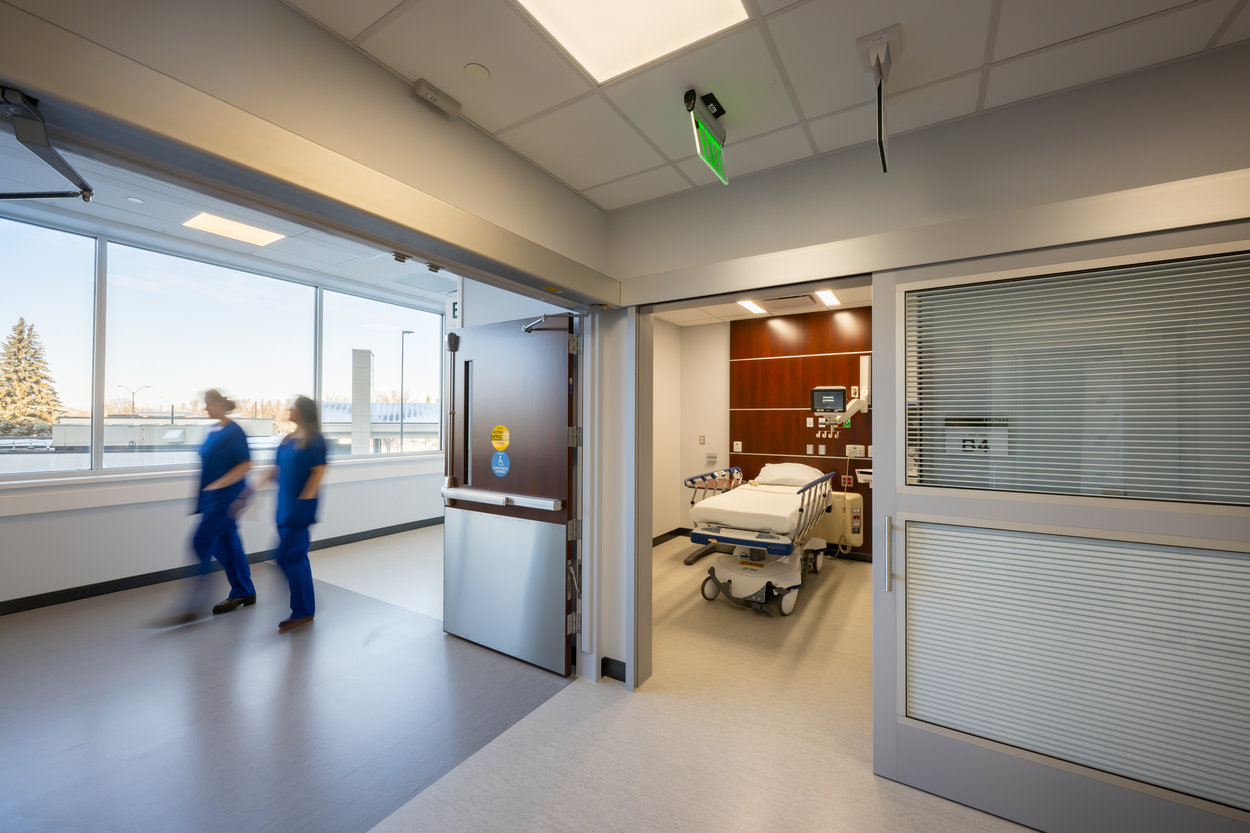
 In medical facilities, visually connected spaces often correlate to higher patient satisfaction and reduced provider stress. However, visual and acoustic privacy remain crucial. How can designers balance these two goals?
Flexible openings, such as full-lite sliding glass doors and windows with integrated louver systems, offer a solution. These systems allow patients and providers to adapt the visual connection or privacy a room affords its occupants with ease. Further, openings with integrated louvers often boast higher sound attenuation than their non-louvered counterparts, further contributing to privacy and an occupant-focused environment.
How does visual connection support patients and providers?
According to a review of research literature on evidence-based health care design published in Health Environments Research and Design Journal (HERD), visually connected spaces alleviate patient and visitor anxiety by minimizing the spatial disorientation common in visually closed spaces. In addition, the review indicates that the cost of giving visitors directions amounted to over 4,500 staff hours annually, which is equivalent to more than two full-time positions.
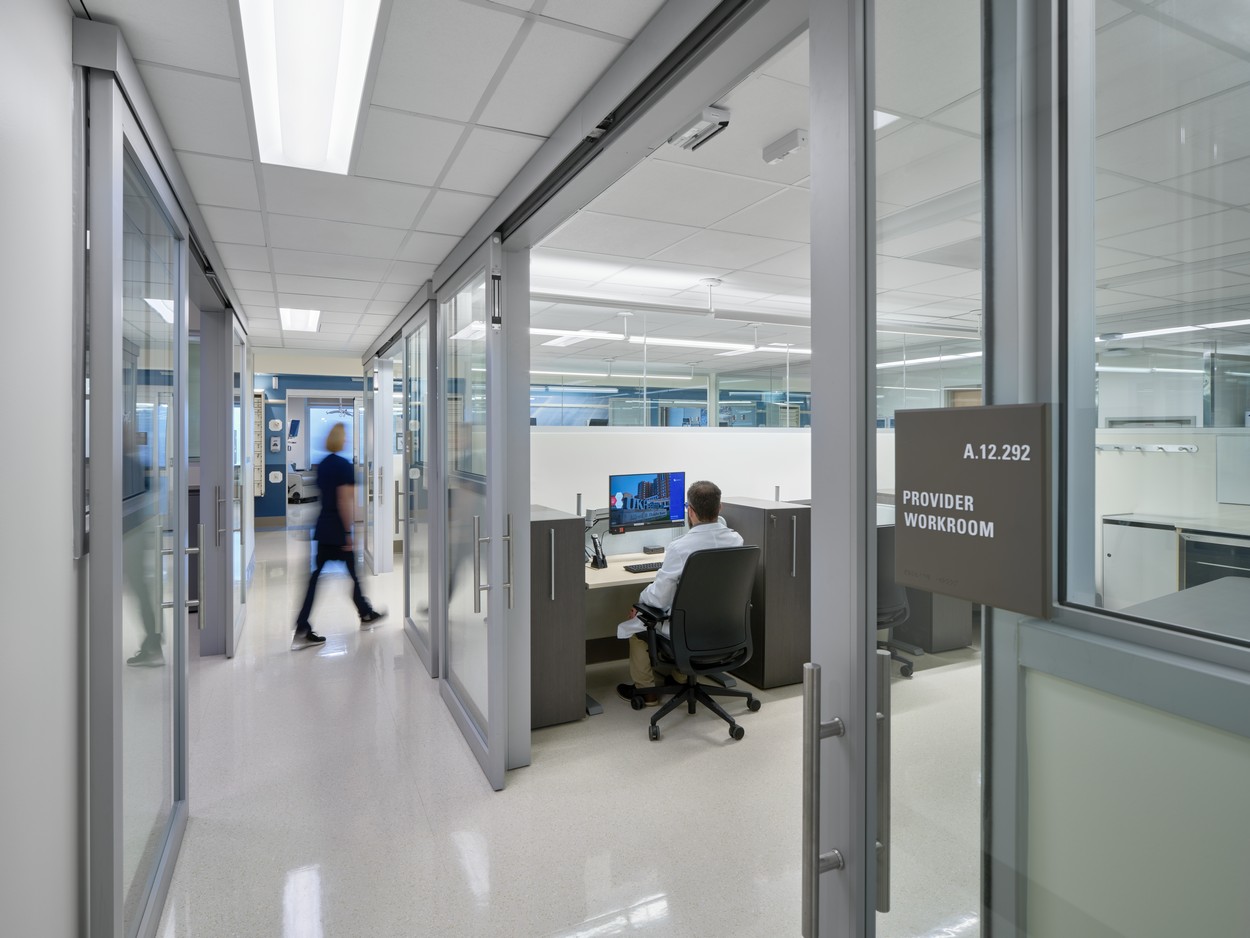
Visual connection also supports medical providers. The renovation of the University of Kentucky’s Albert B. Chandler Hospital included several glazing assemblies, including full-lite sliding glass doors. Because provider workstations are decentralized, solid doors and walls may have made the space feel isolated and less functional. Increasing visual connection supports a better working environment, which can reduce stress among providers.
Create privacy when needed
While there are many benefits to a visually connected space, patients and providers also require privacy to ensure confidentiality, accuracy and to preserve dignity during sensitive procedures. Flexible openings with integrated louver systems solve challenges to visual privacy.
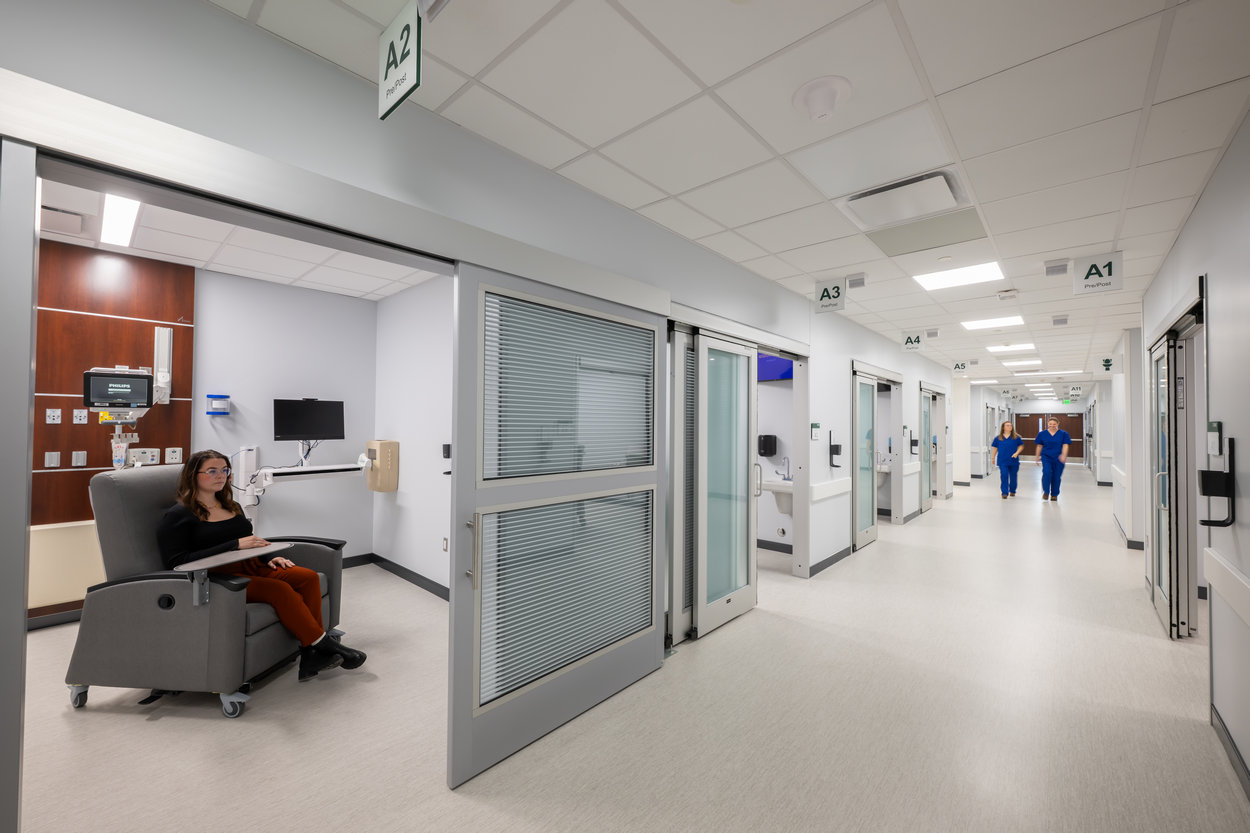
Adjustable to fit the needs of a moment, these systems were integral to the design of Altru Health System’s newest hospital in Grand Forks, North Dakota. Used in windows as well as full-lite ExamSlide™ sliding glass doors from AD Systems, Vision Control® integrated louvers from Unicel Architectural allow patients and staff to adjust their visibility to suite their individual needs. It also enables staff to observe patients without disrupting sleep. Finally, these louvers increase the acoustic performance of their openings.
Why is sound attenuation also important in health care?
Reducing sound transfer is an important component to a robust approach to Health Information Portability and Accountability Act (HIPAA) standards. Ensuring protected health information is not accidentally leaked can support a safer and more patient-focused facility.
Sound attenuation can also mitigate provider burnout by allowing more restful breaks, reducing alarm fatigue and improving concentration on tasks according to an article, “Noise Exposure and Quality of Life Among Nurses,” in the publication Workplace Health & Safety.
Further, increased dampening of ambient noise supports better rest and recovery for patients and has been shown to correlate to more positive patient outcomes and better satisfaction overall.
Improving health care design through product specification
Health care design is complex. Balancing visual connection and occupant privacy is just one example of the several seemingly contradictory design goals common to these occupancies. For the built environment to go beyond functional baselines, designers and specifiers are often tasked with combining multiple components within their walls.
Combining components into opening systems can create unforeseen challenges for health care design teams. These challenges can be mitigated when manufacturers collaborate, share information and work together to develop solutions.
Utilizing an integrated sales team and collaborative approach with several Allegion brands, AD Systems can help building professionals design code-compliant health care interiors that surpass expectations for both patients and providers.