4 considerations to achieve ideal outcomes
By: Marshall Scott
Healthcare construction in 2026 is not defined by a singular trend but by the ever-increasing number of variables that must be proactively managed.
Like a game of Jenga, the success of projects hinges on the balance of numerous building blocks, while strategically navigating challenges such as increased speed to market, lack of skilled labor, increased project complexity and evolving code and regulations. Through early engagement, workforce solutions and a detailed preconstruction effort, construction firms can guide healthcare systems through a towering list of considerations to achieve ideal outcomes.
1. Increased speed to market
With shifts in Certificate of Need, population and care models, healthcare competition has reached a fever pitch. To capture more market share, healthcare systems and providers are working to strengthen brand loyalty by building in new communities and improving patient experience in existing facilities.
The need for speed is nearly in lockstep with a declining construction trade workforce. Although the labor deficit has been growing for decades, new fast-tracked data center projects are diverting mechanical, electrical and plumbing contractors that have traditionally worked in the healthcare sector, while also driving up labor costs. This is especially critical in healthcare construction, as MEP accounts for an estimated 35-40% of the total project cost, based on Robins & Morton’s project estimates and budgets.
Despite these conditions, construction firms have continued to find and test creative solutions that minimize onsite workforce, compress schedules and increase quality. Through methods such as integrated preconstruction, prefabrication and project-specific tech-stack development, projects are keeping pace with demand and delivering greater efficiency.
2. Integrated preconstruction
Despite the benefits, it remains unusual for healthcare organizations to onboard their construction partners and architect teams simultaneously. Once hailed as a best practice, early engagement is now a necessity. As real estate deals become more complex and longer-term growth strategy requires intensive regional and campus planning, construction partners are able to provide valuable insight into stretching available capital further than ever before.
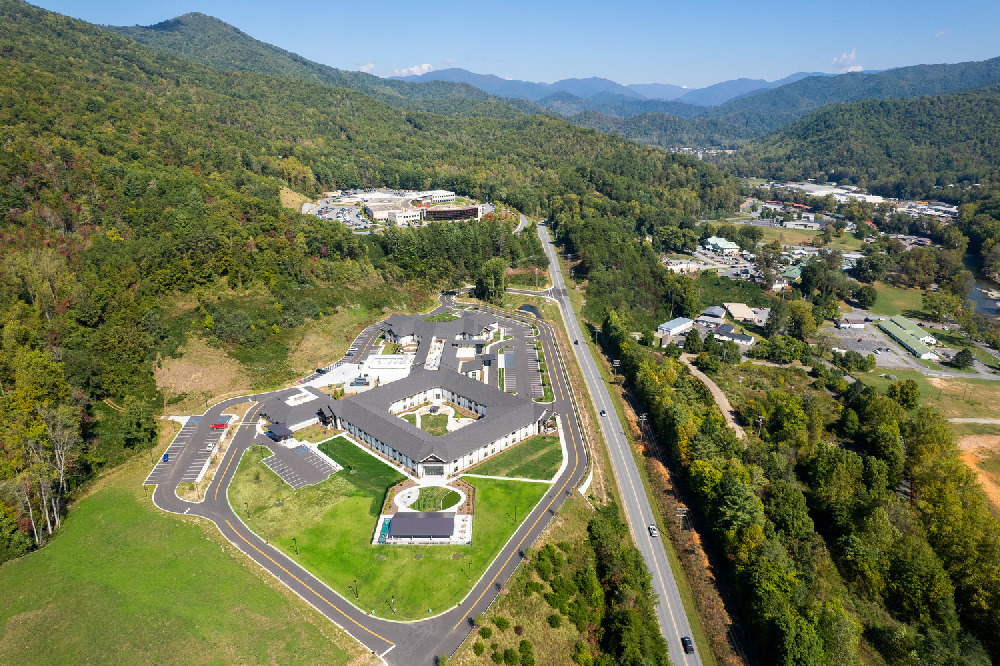
For example, our Tsali Care Center project in Cherokee, North Carolina, benefited substantially from early site selection support. The 131,000-square-foot long-term care facility, dedicated to the care of the Eastern Band of Cherokee Indians, replaces an aging building across town and furthers the Cherokee Indian Hospital Authority’s vision of consolidating all care on a single campus. The first site option, however, would require blasting and removing significant portions of an adjacent mountain. With early engagement and analysis, CIHA was able to shift the site slightly downhill. The adjustment saved the project $26.5 million.
Another beneficial integrated preconstruction tactic is Target Value Delivery, which allows teams to design a building to a specified budget, ultimately improving estimate fidelity, surfacing constructability challenges and reducing later rework. On the Cone Health MedCenter Asheboro project in Asheboro, North Carolina, our company partnered with Perkins&Will and Cone Health to create realistic design targets for its 51,500-square-foot outpatient care center.
The project scope was divided into components — such as sitework, building skin and MEP systems — and assigned cost ranges. Then, project implementation teams were assigned to maintain accountability for their respective budgets. This collaborative framework enabled the team to design within specific parameters while making informed decisions about materials and design elements. The TVD process delivered remarkable precision, with the final guaranteed maximum price within 0.54% from the original target.
Lastly, by taking an integrated approach, healthcare organizations can lock in commitments from MEP trade contractors earlier, benefiting from their insights as design progresses while also ensuring the right partner for the project.
3. Prefabrication
Although not a new tactic, prefabrication has emerged as a front runner in improved project outcomes with its ability to speed scopes of work through simplified assembly and limited requirements for onsite installation. As construction and design teams work together to design more facilities to accommodate prefabricated elements, healthcare organizations are seeing greater returns.
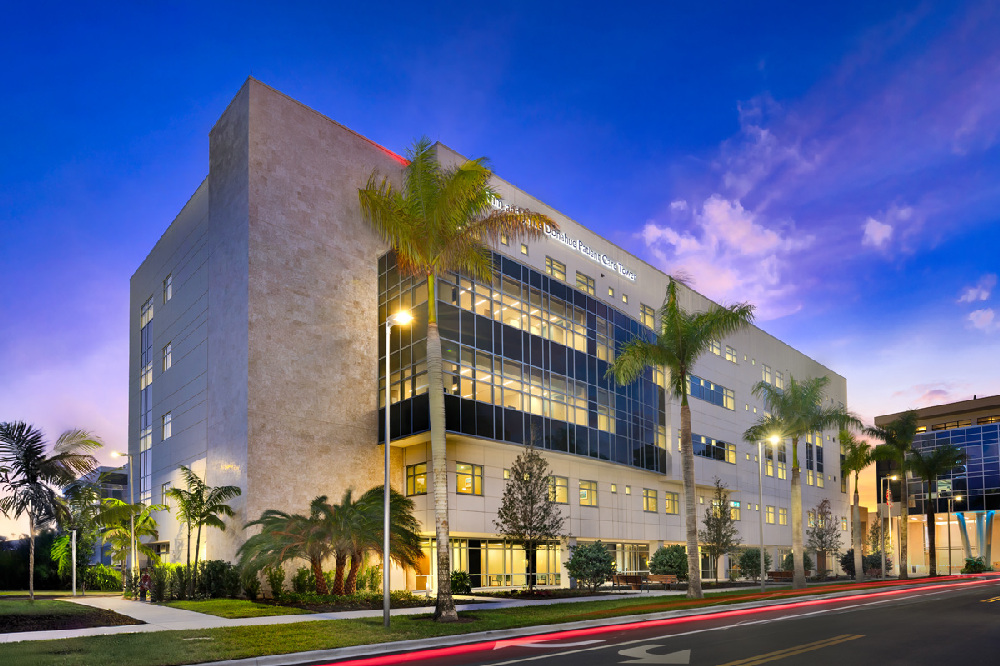
For example, prefabrication drove both schedule and quality wins at Robins & Morton’s latest project at Jupiter Medical Center — the Tim and Jayne Donahue Patient Care Tower in Jupiter, Florida. The five-story, 139,071-square‑foot patient tower benefited from prefabricating the building skin, glazing and long linear systems, which compressed critical path activities and unlocked downstream work.
Prefabricated exterior wall panels delivered roughly 12 weeks of schedule savings on the building envelope and unitized curtainwall saved about eight weeks, some of which overlapped and resulted in 16 weeks of true schedule savings. Prefabricated electrical home‑run racks were installed in four days per floor vs. an estimated three to four weeks per floor in the field. Those efficiencies enabled earlier HVAC commissioning, interior finishes and sitework, helping the team finish the projects four months ahead of the contract date. Factory conditions produced flatter, more consistent exterior panels and glazed units, reducing field touch‑ups and improving water test outcomes. Prefabricated sink kitting and in‑wall plumbing reduced onsite handling, packaging waste and cleanup time. Prefabrication also reduced scaffold needs, minimized weather exposure and lowered the labor premium impact where local skilled crews were scarce.
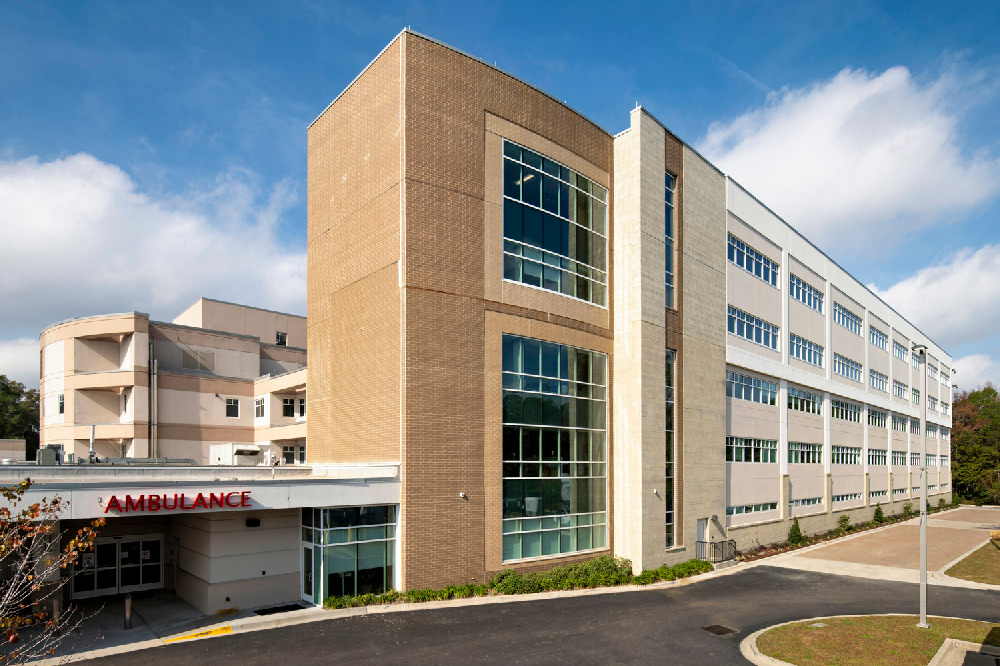
Another example was a recent two-story vertical expansion at Summerville Medical Center in South Carolina. Approximately 85-90% of the project incorporated prefabricated elements such as bathroom pods, headwalls, wall partitions and exterior wall panels. We partnered with client HCA to conduct the project as an experimental test case, measuring installation times and budget deltas. Lessons learned from the project informed countless others, including the ongoing Methodist Hospital Stone Oak vertical expansion in San Antonio, Texas.
4. Technology, AI + robotics
The ways in which technology and AI advances are affecting healthcare construction are myriad, ranging from the care equipment to the required infrastructure needed to support it. It’s no secret that rapid advancements result in increasing complexity, and for some situations, self-perform work is an effective way to reap the benefit of the general contractor’s full-scope project knowledge on a trade critical to project success.
For example, at our UHealth SoLe Mia Medical Center project in North Miami, Florida, linear accelerator vaults were especially challenging due to the need for radiation-shielding mass concrete. The curing process, the South Florida heat and the impact on the critical path made concrete an ideal scope to self-perform. Beyond the success of the linear accelerator vaults, the alignment of the concrete work paid dividends in other areas, including foundations that finished nearly a month earlier than planned.
From the infrastructure perspective, having a team that can mobilize at any time when conditions change is also advantageous. Another of our clients finalized its agreement with an AI in-room care system to deploy across the organization with less than a week before an existing renovation project was set to complete. Our firm’s self-perform low-voltage team leapt into action and completed the necessary connections in three days, ensuring the system was live for all inspections.
Beyond completed facilities, technology advancements are showing up on the jobsite in the form of robotics, machine learning and AI-informed analyses. For example, at the Summerville Medical Center project, Robins & Morton and HCA used an automated progress tracking tool. By attaching a camera to a hard hat, the software gathers project data and uses AI to translate that data into real-time insights and visualizations on the project’s health.
On another project, the Huntsville Hospital Madison Street Tower vertical expansion in Huntsville, Alabama, our team used an automated robot for multi-trade layout spanning its five stories and 154,000 square feet. Every five days, the robot printed every trade contractor’s work for 20,000 square feet — five days in exchange for what would be about five weeks of work.
These solutions, and many more, combine to form an effective toolbox to support the many challenges construction teams face. Like no toolbox is ever fully equipped for every scenario, contractors must keep innovating, testing and measuring to maintain momentum in the face of constantly evolving conditions.
Marshall Scott is an operations manager at Robins & Morton and leads the firm’s Charlotte, North Carolina office.